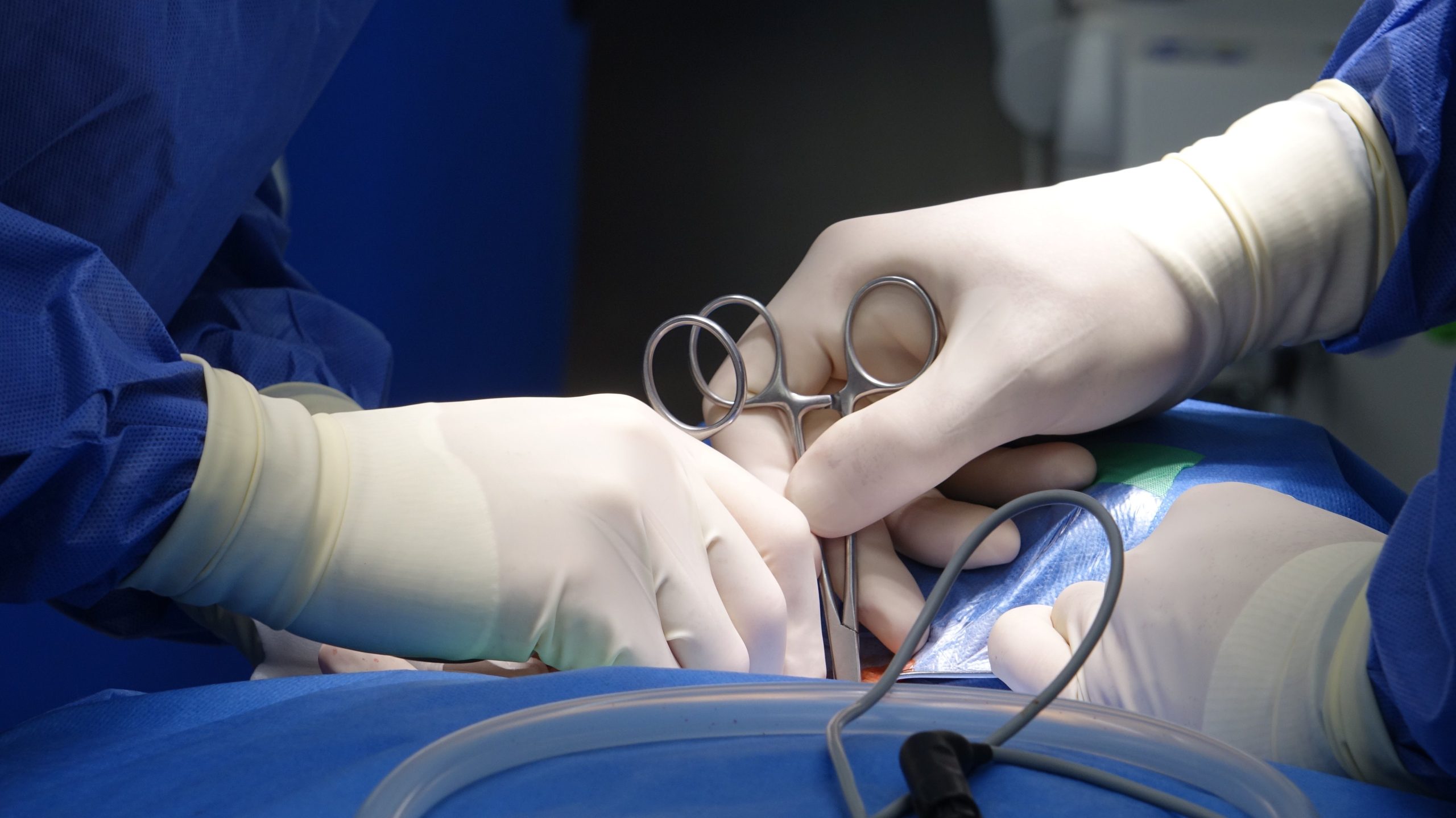
Often, gender affirming care for trans people is misrepresented by transphobes as “mutilation”. This happens while the traits we developed by being denied puberty blockers are weaponized against us. I want to lean into this a bit, discussing forcing trans girls to undergo male puberty under the guise of “what if they regret it later?” and the abject horror that subjects a teenage girl to.
“A woman born in a man’s body”: On reclaiming my flesh from a “man” that never actually existed.
We’ve all seen that phrase. “A woman born in a man’s body”. It is a subtle hint at what a transphobic society does to trans women: it seeks to alienate us from our own bodies. It makes our bodies not our own but rather, some “man’s body”. Which man? Because I know for damn sure that I’m not a man.
But this phrase cuts at the heart of transphobia in our world, doesn’t it? Why is it acceptable to misrepresent a trans woman’s body as a “man’s body”? This is at the crux of body horror, to make her flesh alien and attack a woman at the very core of her identity. And the importance of access to gender affirming care is to push back on the notion that our bodies are “men’s bodies” rather than our own. We are women and it is wrong-headed to insist that we are “men”.
To be transgender is to be your own creator. We take the job from our caregivers and our gods; we shape our bodies and give ourselves names. There is something awe-inspiring, terrifying, and monstrous in such power. Our freedom is so enviable that many try to smother us from existence. There is horror in our everyday lives, but also unimaginable joy. Lives can’t be confined to a single genre — body horror is only one such genre we live in.
“Body Horror and The Trans Experience” by Leighton Parks
Dysmorphia versus Dysphoria: How transphobes gaslight us
Comparisons of being transgender to being anorexic or wanting to chop your own limbs off riddle the Internet. It shows that the person making these claims is writing for a cis audience, not a trans audience, as they are misrepresenting our health care that allows us to be comfortable in our own bodies as butchery when no trans person experiences that way. Now, that’s not to say there aren’t botched surgeries.
The thing is, there is a difference between dysmorphia and dysphoria in the same way that there is a difference between anorexia and sustainable weight loss. Anorexia, like all forms of dysmorphia, stems from an inability to perceive your body and inaccurate perceptions of it being “too fat”. Dysphoria, on the other hand, is different. And I’ll use my voice as an example. I’ve had my voice analyzed by the Speech Language Pathology department at the University of Colorado Boulder and they’ve determined that my voice is in the lower part of the androgynous range. I’m hoping to raise the pitch of my voice so I can be more confident speaking. I’ve identified a surgery that can help me with this, namely Vocal Fold Shortening and Retrodisplacement of the Anterior Commissure and I’ve found a surgeon who can help me. Two, in fact.
And that’s the difference. On the one hand, you have an inability to perceive the body for what it is and action that is not medically supported to get you to harm yourself. On the other hand, you’re targeting specific phenomena with an objective goal of charge in mind. You can identify procedures that will help with this specific issue and once the issue is addressed, the dysphoria goes away.
An article on body horror from Queer Kentucky has an amazing introductory paragraph talking about the experience of a friend who is recovering from Facial Feminization Surgery. I dare not copy and paste the whole damn thing into my post, because it certainly deserves a read just for that paragraph alone. However, this line in particular shares how our medical care is liberation, not a source of body horror itself:
for all of the violence and mutilation that went into this product, it will melt like ice into a new incarnation of Venus
I know when I get facial feminization surgery, that’s what I’m wanting for myself.
A life delayed is life denied: Why it is irresponsible to delay gender affirming care
We’ve heard the legal maxim “justice delayed is justice denied” and it is so old, historians have a hard time placing its origins. It goes so far back as the Babylonian Talmud, where Rav Pappa wrote “When justice sleeps, justice is cancelled.” In Pirkei Avot, Nachmanides understands the advice given by Jethro in Exodus 18:22, to judge the people at all times, as suggesting that Israel needed more judges because potential litigants would otherwise suffer injustice due to their inability to find a judge to hear their case.
This concept has made its way into English Common Law and in the Magna Carta of 1215, where s. 40 reads “To no one will we sell, to no one will we refuse or delay, right or justice”. Sir Francis Bacon wrote “Swift justice is the sweetest” when elevated to Lord Chancellor of England in 1617. Martin Luther King, Jr. even cited the maxim in his Letter from Birmingham Jail.
Given how personal our own bodies are, it seems even bigger injustice to deny us our healthcare a day longer than necessary. Every day we are denied the care that allows us to feel comfortable in our own bodies is a day that we are denied the kind of lives that cis people take for granted. It is a grotesque injustice to do this to trans people, especially given the discrimination we face for being trans.
Mitigating regret is not a good excuse for perpetuating harm
To touch back on that “what if they regret it” bit, I would argue that we don’t use that excuse to deny or delay any other form of health care. For example, when I was a teenager and my father fell off the roof of our house, the EMTs didn’t refuse to take him to the hospital for the bone poking out of his leg because “what if he regrets it later”? The emergency room doctors didn’t refuse to set the bone back and put his leg in a cage because “what if he regrets it later”? No, they did it with a minimum of hand wringing because to make him walk on a broken leg with bone sticking out of his flesh would be unthinkable. At least, for a cis man with a broken leg. So, why is it somehow acceptable to medically neglect a trans girl who simply needs medications to stop the wrong puberty from happening?
When I went in to have my gallbladder removed after I was suffering gallstones, the surgeons didn’t make me wait to obtain a readiness assessment. They didn’t make me perform a one year real life test to prepare for life without a gallbladder. Once the problem was identified, they acted. This is how medicine should work, a problem is identified, evidence-based treatment occurs. But somehow, for gender affirming care, unnecessary roadblocks are put up and people ask “what if they regret it later” while ignoring that gender affirming care has one of the lowest regret rates for anything. In medicine, people regret hip replacement surgery more than trans people regret gender affirming care. Hell, people regret going to medical school more than trans people regret our care.
And to pre-empt the inevitable response from transphobes, yes, my father’s surgery was an emergency surgery. However, my gallbladder surgery, because it was scheduled in advance, is considered elective in spite of the fact that the ER in Longmont coordinated with my surgeon’s office in Fort Collins to get me scheduled. Elective simply means scheduled for in advance. It doesn’t mean that the surgery is a choice or that the pain isn’t real. I’d say it’s misleading and irresponsible to refer to any life-saving surgery as “elective”, whether it’s gender affirming care or removing a gallbladder.
My only regret for my gender affirming care is not having quicker access to it.
Choosing Joy while Speaking Truth to Power: On Writing in Multiple Genres
To be clear, I don’t want to write just body horror. My first manuscript is a YA urban fantasy with occult themes but is largely slice-of-life. My current manuscript is a romantasy. In my hopper, I have another story planned that is an allegory for the domestic violence I survived and the horror of being married to a man who is, deep down, empty inside. I want to write a wide range of stories and a wide range of trans characters. I want to celebrate trans joy while acknowledging suffering.
As Zoe Rose Bryant wrote in her piece on body horror and the trans experience, “in the midst of all that mess, there’s beauty to be found”. That’s my hope for my own writing, to find that beauty and in writing body horror, my goal is “to find the hope beneath all the horror of my personal and political existence”.
Long live the new flesh, indeed. Now, if you’ll excuse me, I need to order myself a copy of Bound in Flesh: An Anthology of Trans Body Horror, which I only just found out about writing this post.
Be First to Comment